
Poor Housing was one of the major health problems facing the City. Many houses were erected with speed, on ill-prepared sites to meet the urgent demand for accommodation from a rapidly increasing population. There was almost no accommodation specifically for the elderly, or adapted housing for the disabled and very few homes solely for women.
While Hull had an overcrowded City Centre, the worst living conditions were to be found in Hull’s dock area. Many working class families were crammed into poorly built court houses, often 12 people to a house and different families sharing the same room. These ‘homes’ were old, damp, with insufficient light and ventilation, without back ways and crowded together. 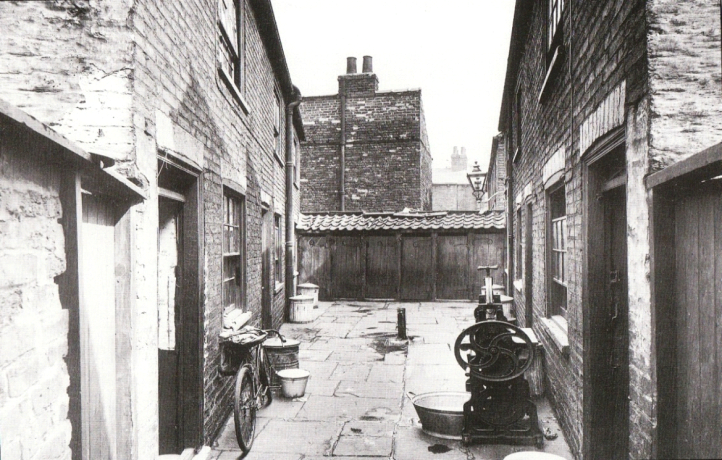
They were uncomfortably hot in summer, bitterly cold in winter and had no direct water supply. Toilets were inadequate and had to be shared by households in the same street. Rubbish stagnated in unpaved streets. The Eastern Daily News published a report in 1883, which compared the streets off Hessle Road, with the ‘foulest slums in Constantinople’. It reported houses “had no furniture and everywhere animals and humans lived together, with sewage flowing from outdoor privies and forming pools in the street.”