
Language
The First World War also introduced new words and phrases into the language. Some of these words included, “camouflage, pill box, tank, plonk, bumf, guff (rumours), dud (a failure), demob, conchie (conscientious objector), and streetcar (a name for a shell)”. “Snapshot”, “bloke”, “scrounge”, “washed up”, “binge drink”, “trench coat” and “duckboards” were other trench vocabulary, brought home. “Skive” came from the French word ‘esquiver’ (“to escape, avoid”). “Bully” Beef came from the French word boulili, meaning boiled. “Strafe” meaning to ‘punish’ in German, was also adopted. “Swipe” was a Canadian word, “Cushy” was a Hindi word meaning pleasure. Backchat – pronounced as batchit, came from a Hindi word meaning conversation. “Dingbat” was an Australian word that referred to an Officer’s batman or an irrational individual. “Lousy” and “crummy” both referred to being infested with lice, while “fed up” emerged as a widespread expression of weariness among the men. Other trench slag included “Cop It”; “Cubbyhole”, “Doolalley”, “Having a field day”; “Muck in”, “Muck about”; “Spit and Polish”; “swinging the lead”. Other words included “Zero Hour”, “Over the Top”; “Jam on it” also entered the common language. “Goodnight kiss” was the term used for the last shot made by a sniper at the end of an assault.
“Shell shock” and “Trench foot“ became new medical conditions. “Conked out”, and “blind spot” came from air force expressions. Several phrases from the criminal underworld also entered wider use, among them “Chum” – formerly slang for an accomplice – “rumbled” (to be found out) and “knocked off” (stolen). Soldier phrases, like, “Having a chat“, (sitting around de licing clothing), ‘copped a packet’ (wounded or killed), ‘pushing up daisies’ (an euphemism for death). “Argue the Toss” derived from a trench gambling game involving flipping a coin. “A Fair Whack” (sharing parcels) and ‘Over the Top’ are still terms, widely used today. ‘Zepps in the Cloud’ became a popular term to describe sausage and mash, but is less used now.
Fashion, hair styles, clothing, and cosmetics, also changed with the war. Tight corsets and bodices were replaced with more free flowing clothing. Women wore shorter hair and skirts, and sometime wore trousers to be practical. They wore lipstick and courted sun tans to display affluence. The phrase a ‘Girls night out‘ was first coined during the war, to describe female munition workers, spending their wages together, unchaperoned around town.

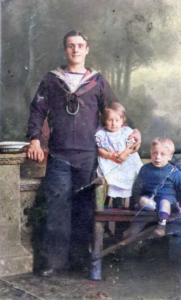
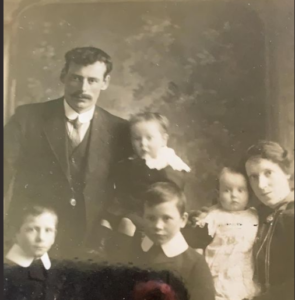
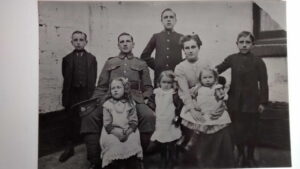
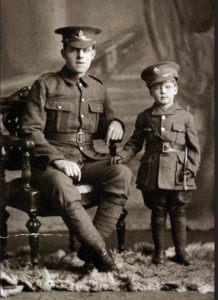
13th EYR, with wife Edith and son, at 3 Argyle Street, Hull. He died on 10/07/1916,aged 29.







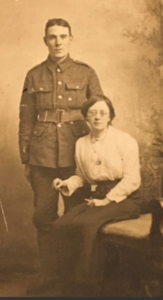

Member of the Women’s Army Auxiliary Corps in her uniform. (c) Hull Museums.
